
You wouldn't know there's a saint driving that little burnt red minivan — some would call it a burgundy Chrysler, ten or twelve years old, no kidding — there's a saint driving around in it. OK, let’s be clear about this. We’re not talking about the biblical sense of a saint. We’re talking about a saint in the Boxing gym context. Think about it we’re not perfect people we went into this circumstance fighting something. Gotta be off our rocker a little bit. I like to call it Miss wired to be training and getting punched and beat up while you do it. I like to think we’re good crazy so when we talk about the saint of a boxing club, we’re not talking about the holy version we’re talking about the person that will jump in a real fight to break it up, and help a kid with a life issue in a boxing club. Who's chasing a nineteen-year-old kid named Ethan around, telling him he needs to get his GED to get a better job? Only a saint does things like that. Selfless actions. Uncommon. Almost unheard of. And I get to see it every day.
The patron saint of boxing clubs. She came into the gym about five years ago or so.
Didn't look like a saint at the time — mother of four, busy, tired, taking care of everyone but herself. Life has a way of building patterns. As we reach our mid-30s and crest into our 40s, life can become redundant. It's not bad, it's just a pattern that involves a lot of attention and care for other people, lack of sleep, and trying to fit into a lifestyle that worked for somebody ten years younger. The mind can trick you into thinking you can still do all this stuff, that your metabolism and bodily function are the same, when in fact they're changing rapidly as you age. Sandy was over 200 lbs when she came into Gregory Boxing.
Everyone who walks into a boxing club is fighting something. For me it was anxiety and alcohol. I've had people share their illness, addiction, loss of a loved one, disability, discomfort, cancer, depression, PTSD, self-esteem, ADHD, and anxiety issues. I have a pair of signed Muhammad Ali gloves on display, donated by the widow of a Marine who took his own life. Memorial cards of a friend who passed from addiction, and pictures of men who sacrificed their lives for us.
A lot of us find ourselves, start to like ourselves again, gain strength in mind, lungs, legs, arms, shoulders, core, rump, heart, feet, and hands. Oh, there's soreness — this is a full-motion, full-body workout. You regain mobility and lose rigidness; you can turn your torso after a few months of training. The heart and lungs are muscles and need exercise. We ignite those muscles along with maintaining concentration in the moment while your partner is punching your mitts or you're throwing combos back at them. You can't float off and think about the argument you're having with your spouse or what you need to make for dinner tonight. We stay in the moment, and it improves our cognitive function. The sweet science.
This format of training was introduced to Wayne Gregory by his friends from Thailand. Study martial arts and you'll see how they train there — holding mitts and gloves, snapping combos down the street, practicing play-fighting for hours during the day from the time they can walk.
Everyone in there has a reason to be there, and they're fighting something. Sandy and I never had a heart-to-heart, some kind of come-to-Jesus, this-is-why-I'm-here moment. But I'll tell you that a kind person with a strong Christian belief, a mother of four devoted to her husband, walked into the gym, and I've witnessed a transformation over the last five years. It's not that she wasn't strong or tough when she came in — she was. She'd done stuff, lived places, seen things. But I saw a transformation from someone who'd gotten a little off track with health and fitness, and probably a little lost in between the years, into someone who grasped a role of leadership in a community, affecting people's lives positively and showing our kids by example how to serve and help the people around them. It's hard for me to think of anyone — and honestly, I know the answer — she's the most generous and empathetic person I've ever met, and she's shown acts of kindness without ever expecting anything in return. I'll give some examples further in the essay. For now I want to take a step back and explain where I was when I opened the boxing club.
Restless, irritable, and discontent, that's an AA term, just to be clear. But it's exactly where I was in my life. Not drinking, you could call it sober, but also not happy, not finding joy, not comfortable in my own skin. Boxing started to give me a purpose, a way out of how I was feeling, and that obviously led to opening the gym. After my buddy committed suicide, I flipped out — had something like a nervous breakdown — and in that same window I got a severance offer, and in that conversation I blurted out that I would start a boxing club. A lot of people would say I was crazy looking back on it. I listened to my heart, I prayed on it, and I acted. Staying in a corporate role was scary to me, because I was reflecting on why — what was the point. It didn't feel good, and I'm very thankful I made that abrupt change. I was sick. I opened the gym. I didn't know what I was doing. I had some money, and by the grace of God it worked out, because the way I treated some of the people working with me in the beginning was all wrong. I made a lot of mistakes, and I'll be the first to admit it.
Sandy, and a few other great, amazing people, came into my life around that time — the Peñas, Cam, and Adam Jeffery — so many people who supported me in that core beginning, who stuck with us and watched us evolve. Sandy became part of that, and as things fell apart with my coaching staff, she started helping with administrative work. In my volunteer coaching life — football, baseball, name a sport — you're always heading toward parent happiness, and most of the time that was my wife Michelle. My kids played hockey; my wife was the team manager, scheduled all the travel, hotels, and tournaments. In my mortgage life, when I originated loans, I had an assistant most of my career helping me stay organized and keep up with appointments and paperwork. So establishing an administrative person to help run the boxing club wasn't new to me. I trained Cam first on our POS system, then Sandy over time. They both helped me run everything around the gym, from kids' parties to hosting amateur boxing events.
In a boxing club built for competitive boxers, you typically need an alpha — someone with a lot of experience, or at least the appearance of it, who has all the answers to the sport. Our training methods aren't the traditional methods used in competitive boxing clubs. We cater to members who aren't fighters first, doing non-contact, high-cardio, low-impact drills that work for a beginner or an advanced boxer alike. Like in Thailand, we understand that repetition and fundamentals produce a competent athlete. Bringing in men with a lot of experience early on, they'd start taking territory, wanting more than we could give them. It usually came down to them getting comfortable with the members, the members showing appreciation, and then them asking me if we could change the name of the gym to their last name. That's when the locks get changed, the email goes out, and it reads something like: “I opened this gym to improve my mental health, and at this point you are negatively impacting my physical and emotional state. This is not what I signed up for, and we wish you the best in life. Sincerely, Joe.” Something along those lines — you gotta go, and we're going to keep moving forward with our community. I own my mistakes.
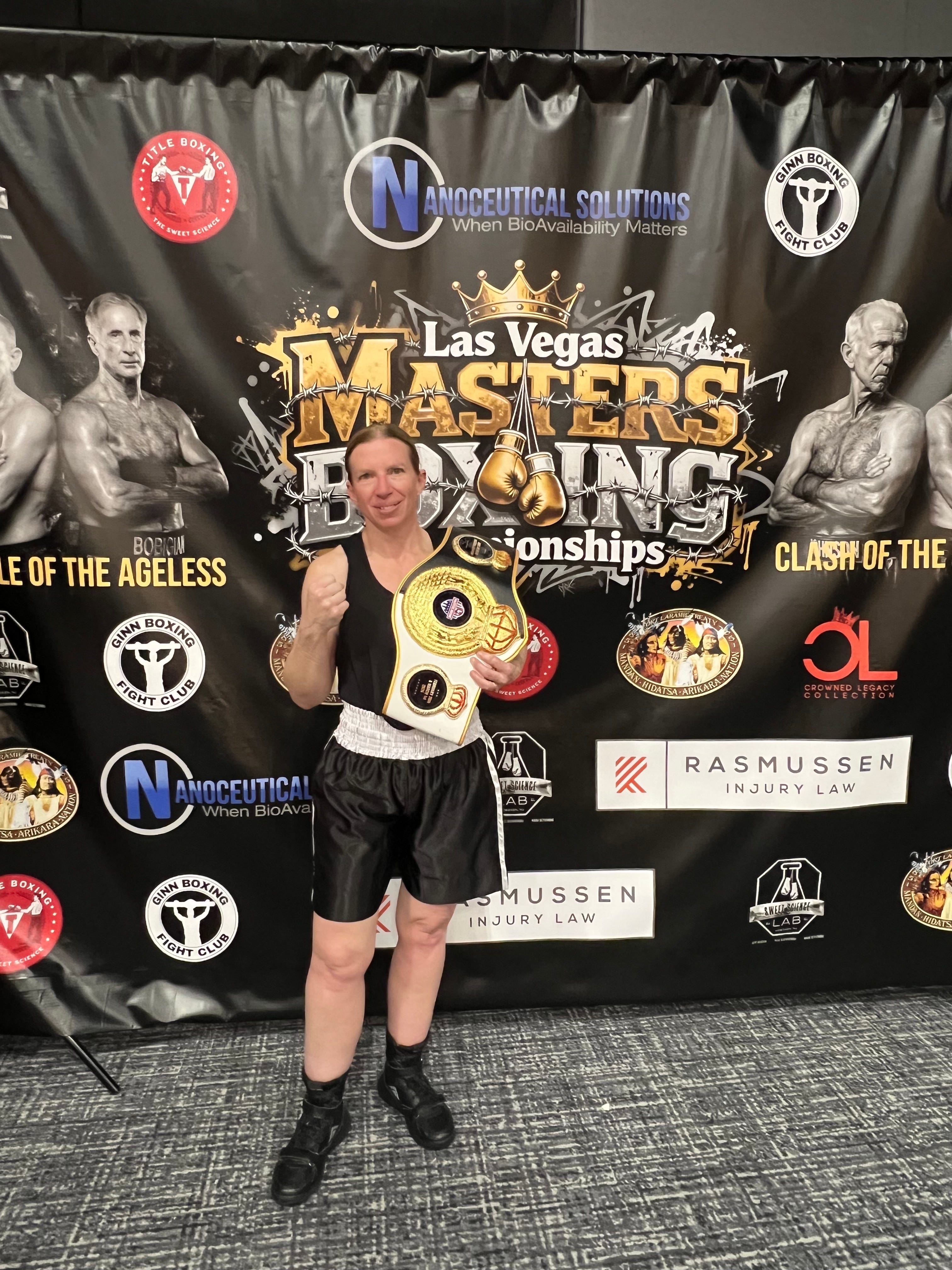
That’s the world Sandy walked into and reorganized. What works at Gregory Boxing is people contributing coaching time, administrative work, volunteer work — but also having a life, a job, a family. The boxing club is a fraction of their day, maybe an hour a day, maybe five hours a week, maybe twenty in some cases. Relying on it as a primary income was never the model, and I paid for that lesson over and over, trying to find an "alpha" for the competitive team. They've all come and gone. But as things progressed, Sandy took hold of operations, lost over eighty pounds, got certified at the bronze level as a USA Boxing coach, and had three amateur fights. She lives it, walks it, talks it — her daughter's a boxer too — so when she coaches, whether people like it or not, she's earned every bit of it, no doubt about it.
What I mean by "they" is the people who started with us and are still in the training class today. Sandy was quite different five years ago — 80 pounds different, and not necessarily as coordinated as she is today. That's what happens as you get older: you get rigid and stiff, not as athletic as you might've been when you were young. We run a system. We have a program, classes, and standards, and the combos typically follow a pattern through the week — we're leveling people up. You start with the jab, then jab-cross, then jab-cross-hook: 1-1-2, 1-2-3. You can win your first amateur fight throwing those three combos the entire fight. You can win an amateur fight on the jab alone. Wayne Gregory only allowed me to throw straight punches — one-twos — in sparring for the six months before my charity fight nine years ago. Straight punches win fights. It's science.
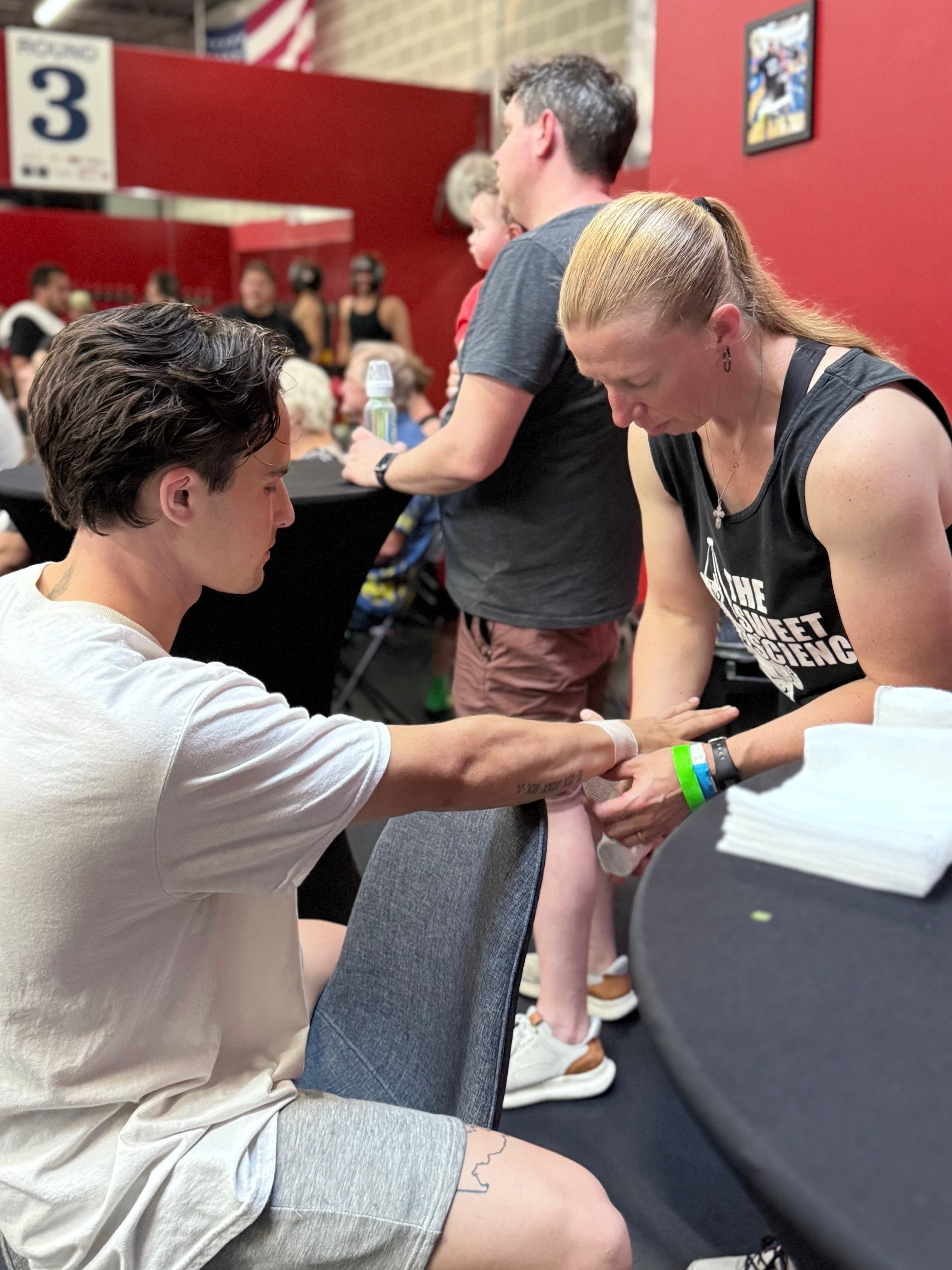
Look at what's happening today: Sandy runs our administrative work and billing, our POS, any marketing where we need print work done, and she handles all our inventory — T-shirts, wraps, gloves. It's a two-step process: I'll typically place the order and authorize payment, and she'll organize and itemize the stock. She has access to our corporate card and is always courteous about giving me the ability to approve any charges she makes. She handles registering and maintaining proper registration with USA Boxing for our athletes and coaches. She's one of the best hand-wrappers around the gym, because her background as a nurse practitioner is on par with casting a hand. It's solid.
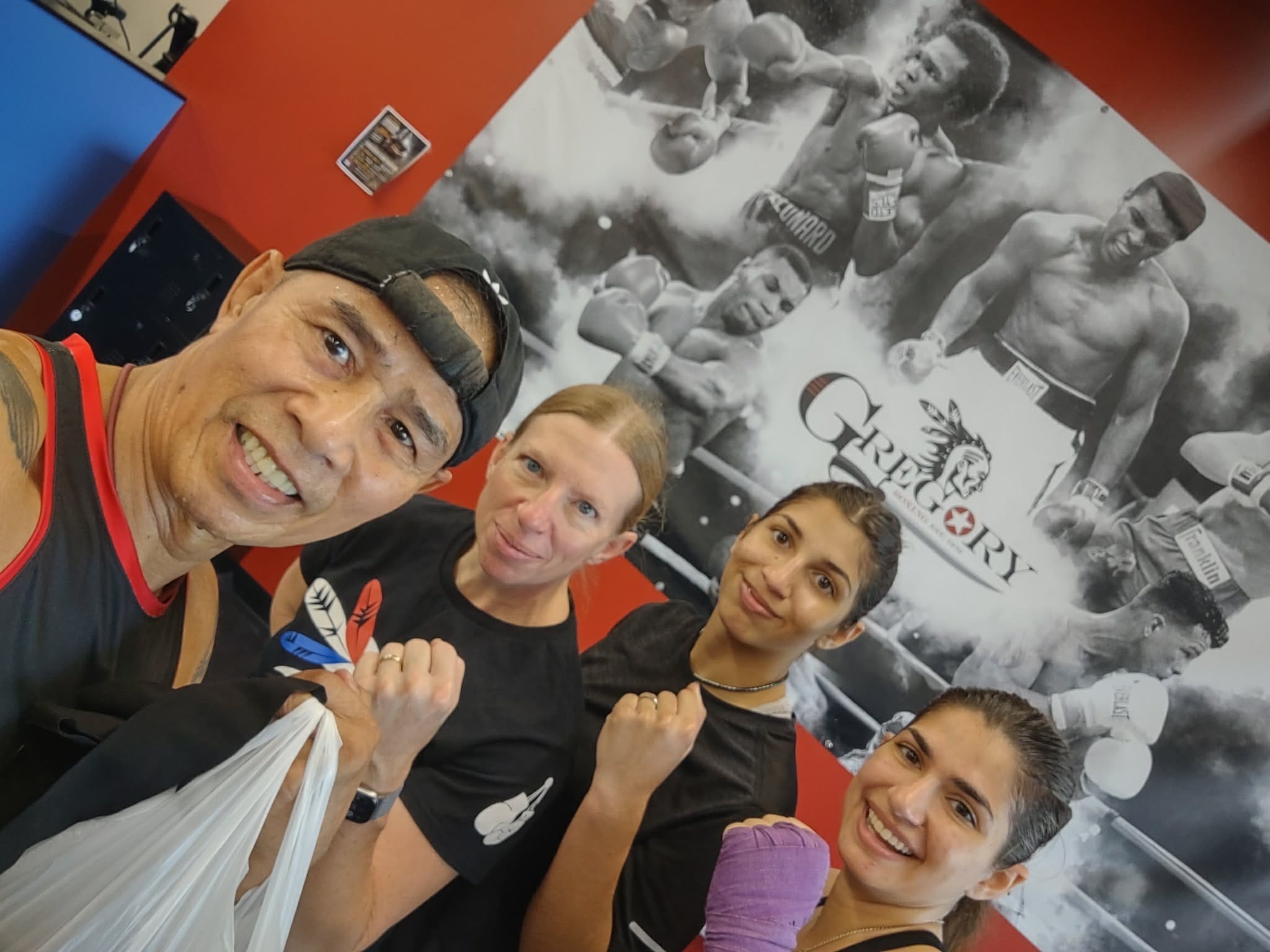
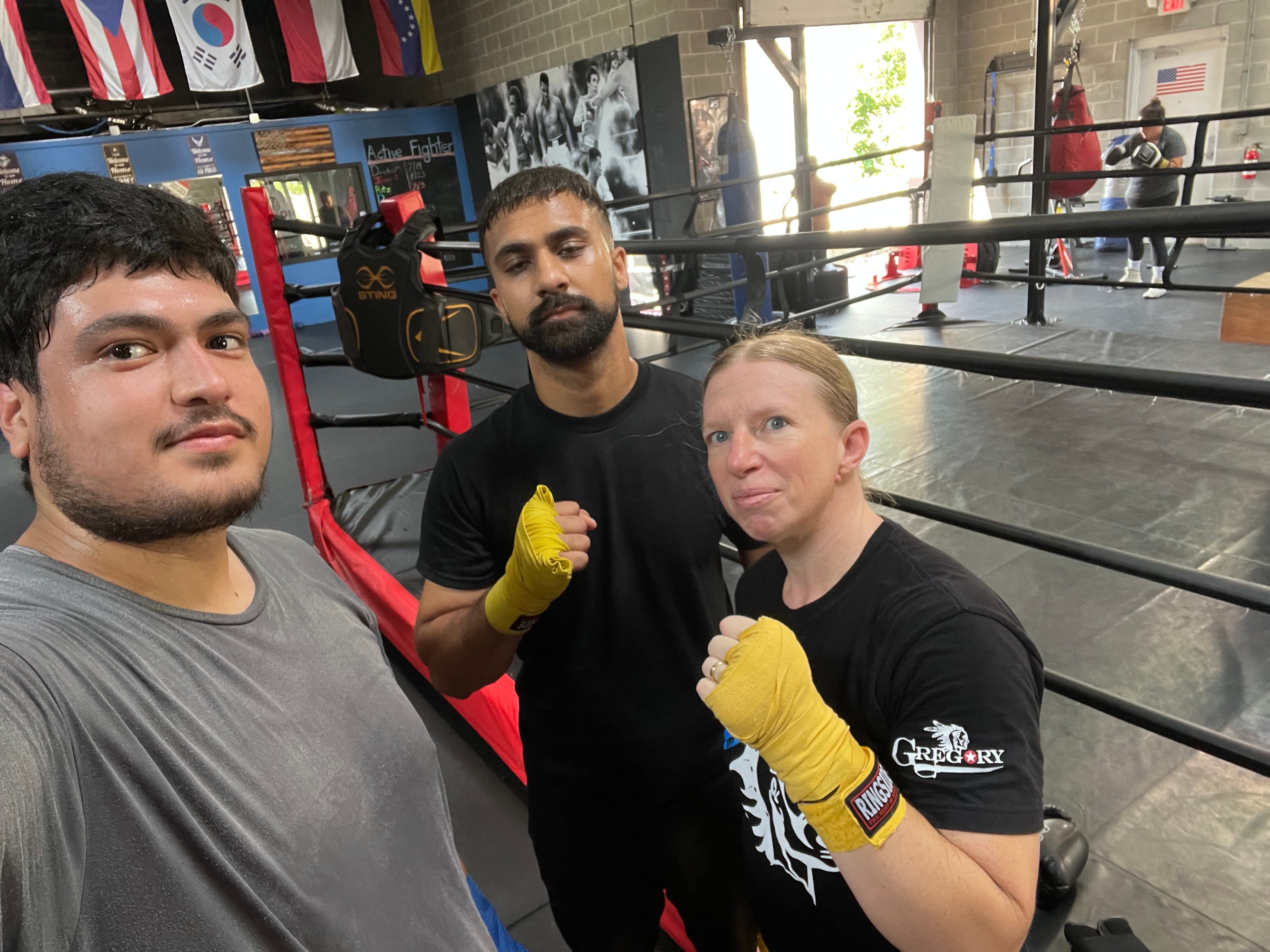
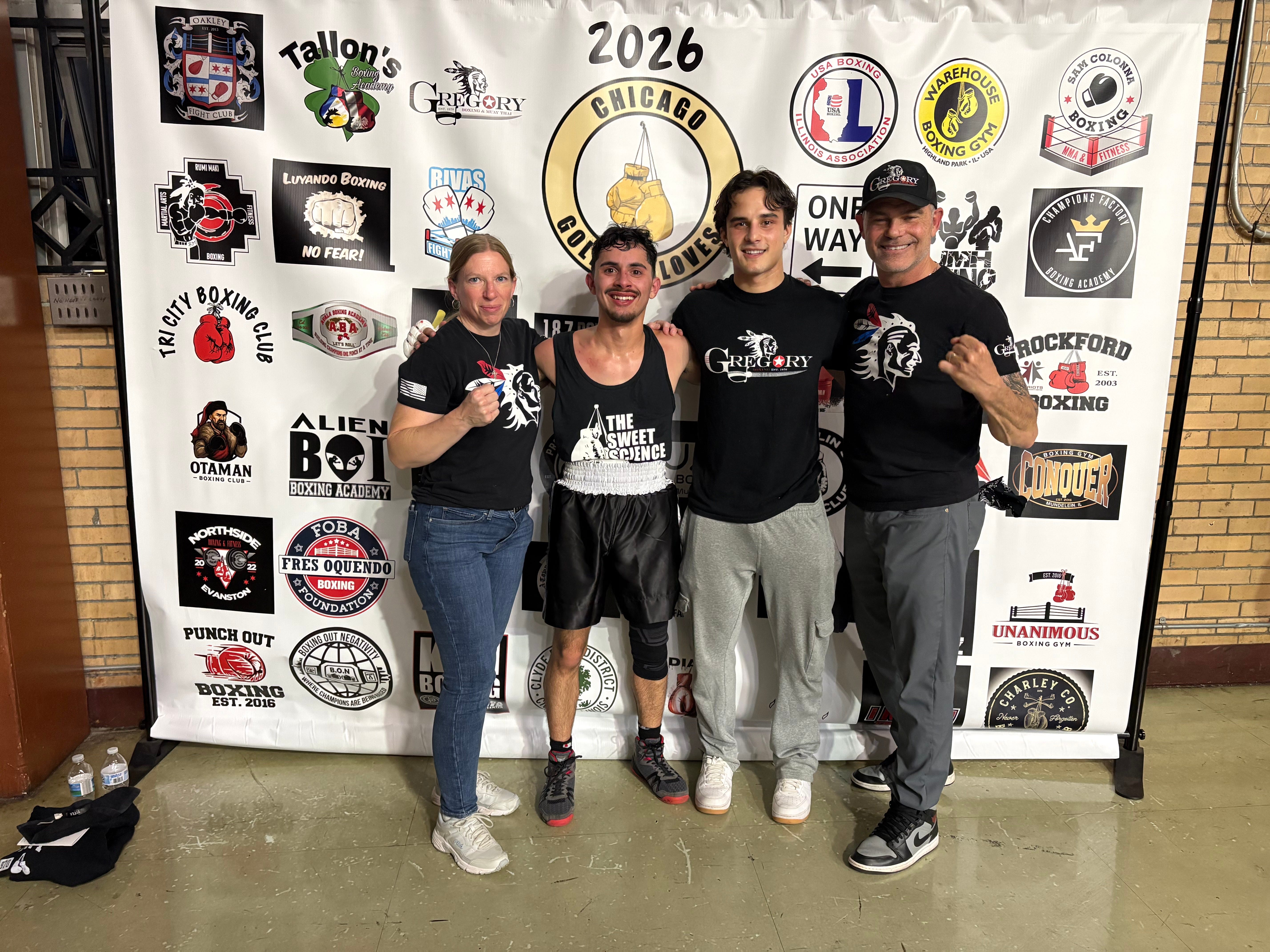
We have a rule at Gregory Boxing: no drama, no politics, no religious favor, no social cliques, no bias to race, no judgment of disability, no bullshit. Sandy has held our culture and community to that standard, true to a simple philosophy — we accept anyone willing to try boxing and give us a full effort. No flowers, no butterflies. Snap a punch and make the pad pop, or leave. Seven to ninety-six years old, disabled or not, forty-five pounds or two hundred and forty-five — you can snap a punch on a bag or mitt. It's a decision made between the ears. Give effort, or find another community. She has honored, supported, and upheld our creed, and our loyal members — the people who get what we are and who we represent — appreciate the consistency.
Shaking down kids in their late teens, offering to help them enroll in ju-co, trade school, or get their GED — that's Ethan's story, and it earned its own piece here. Who does that? Saint Sandy does. Kindness and consistency go a long way with people who are healing. She says she's there for us, that she'll listen when we need her to listen, and give her opinion if asked. She's the role model we need in a boxing club — nurse and servant ministry all at once, like she was sent from God.
Maybe the universe aligned us. Maybe it's an angel looking out for me again — more likely. Either way, we've accepted a mission, and we benefit from the service work. What a joy, what a gift, to have a friend like Sandy.


